
In today’s modern world, Bluetooth technology has become synonymous with wireless communication, connecting a multitude of devices from smartphones to speakers. But did you know that the name and logo of this ubiquitous technology were inspired by a 10th-century Viking king, Harald Bluetooth Gormsson?
The Unifying Viking King
Harald Bluetooth Gormsson, reigned over Denmark from around 958 to 986. He played a crucial role in unifying Denmark and its neighbors, modern-day Norway and Sweden. Not only did he strengthen the bonds between these territories, but he also helped Christianize Scandinavia. This ultimately paved the way for Denmark and the region to join medieval Europe’s thriving economic and political landscape.
How the nickname Bluetooth came to be
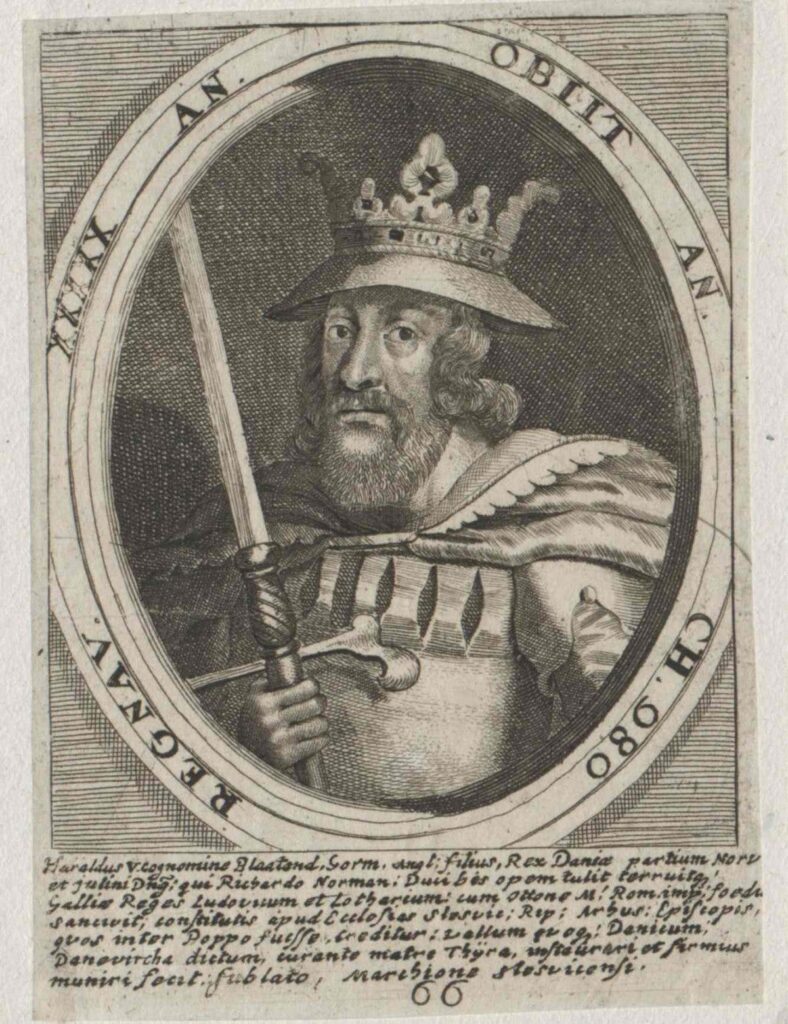
The nickname “Bluetooth” likely stemmed from Harald’s rotten tooth, which appeared blue or black. The first mention of this detail can be traced back to the 12th-century Chronicon Roskildense, a Latin chronicle recounting Danish historical events. However, the true origin of Harald’s discolored tooth remains uncertain. Some believe it was due to a fondness for blueberries, a fruit native to the Scandinavian lands.
Naming a New Technology
In 1997, several major communication companies, including IBM, Intel, Ericsson, Nokia, and Toshiba, collaborated to develop a technology that would connect various devices. While enjoying a drink in a Toronto bar, two engineers from Intel and Ericsson bonded over their shared passion for history. As they did so, they stumbled upon the idea of naming their invention after the unifying Viking king, Harald Bluetooth.
The engineers likened King Harald’s role in uniting Denmark and its neighbors to the technology’s ability to connect different devices in a single network. The code name “Bluetooth” was initially intended to be temporary. However, the name’s powerful symbolism resonated with the project’s communication team. It was eventually retained as the official name when the technology was launched in 1998.
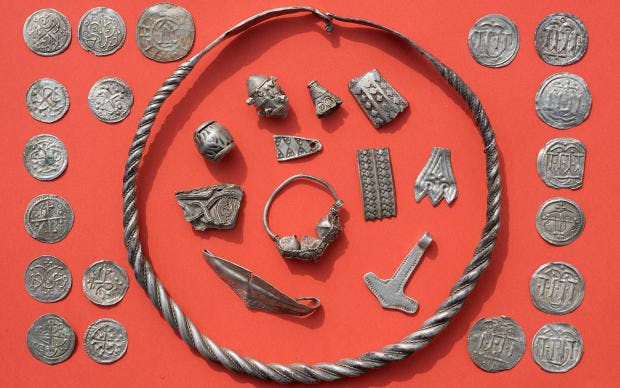
This treasure was found by a 13 year using a metal detector.
The Design of the Bluetooth Logo
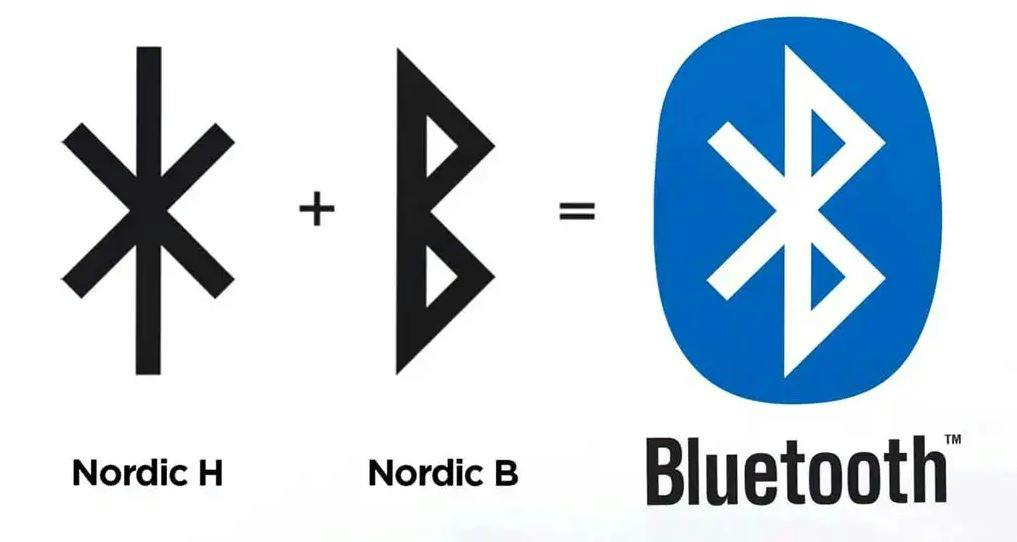
The Bluetooth logo, too, has its roots in Viking history. The symbol combines the runic initials of Harald Bluetooth. It hails from an alphabet used by the Germans and Scandinavians during the late antiquity and Middle Ages.
One of the most significant archaeological traces of Harald Bluetooth’s reign is the Jelling Stones complex in central Denmark. Harald’s father, Gorm the Old, erected the first carved stone in memory of his wife, Thyra. This was while Harald raised the second stone to honor his parents and celebrate his political achievements. This included the annexation of Norwegian and Swedish territories and the Christianization of the kingdom.

He later fell from power, when his son Sweyn Forkbeard forced him into exile. Despite this, Harald Bluetooth’s legacy has persisted through time. His influence on Danish history and his association with the popular Bluetooth technology have ensured that this remarkable Viking king continues to be celebrated and remembered.