
Discovering an Ancient Analog Computer: The Mysterious Antikythera Mechanism
In the azure waters off a tiny Greek island, sponge divers made an astonishing 1900 discovery – an ancient shipwreck spilling luxuries and artifacts from the ocean floor. But upon retrieval, perhaps no relic proved more mystifying than three corroded fragments of an unusual bronze machine found crushed among marble goods. In time, intense study revealed these simple lumps as pieces of an elaborate geared apparatus capable of predicting astronomical patterns, eclipse cycles, and maybe more. Yet its existence seems outdated, predating similar devices by over 1,000 years. Just what was this ancient analog “computer”? How did Grecian technology supposedly lost to history produce such an instrument? Its cryptic functions continue inspiring wonder and fierce scholarly debate today.
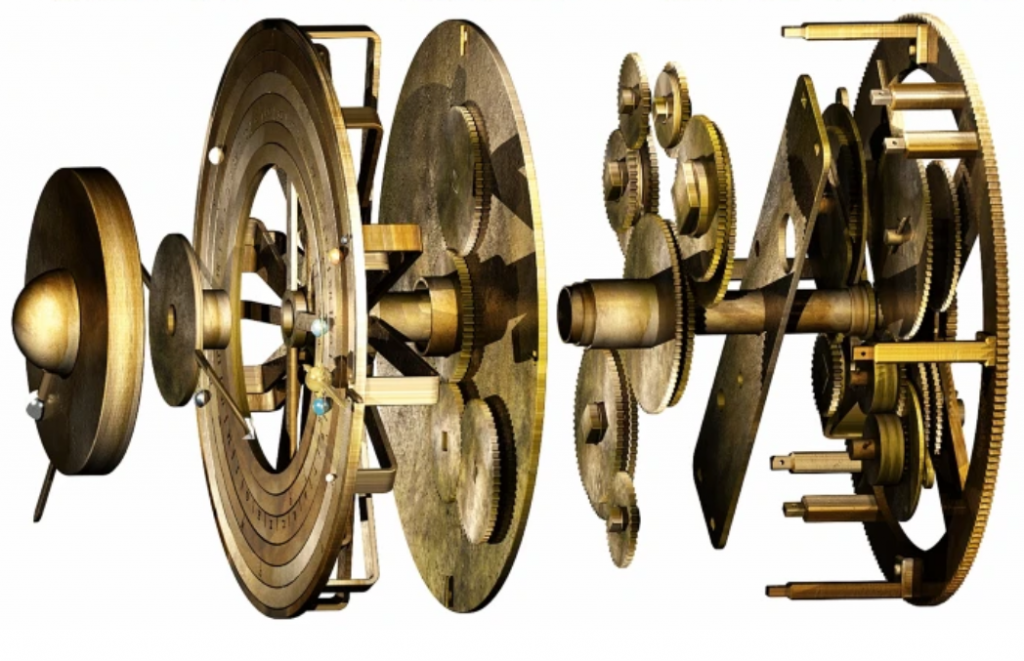
Salvaging a Shipwreck’s Treasure Trove
Around 1900, sponge harvesters off tiny Antikythera island first spotted curious remains of an ancient wrecked vessel. Recovery efforts gradually excavated dozens of well preserved Hellenistic luxury items buried under sand – statues, coins, jewelry and pottery dating potentially to Julius Caesar’s era.
Archaeological excavation also produced three unassuming fragments. Warped and corroded, these nondescript bronze pieces initially drew scant attention next to showier artifacts. But noticing gearwork shapes strangely advanced, researchers wondered if some lost geared instrument fragmented in the vessel’s demise. It would take another 50 years to grasp precisely how significant these lumps truly were.
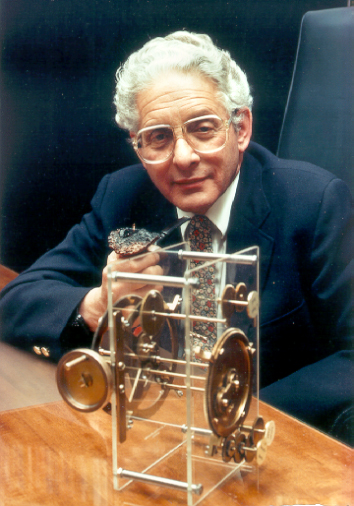
Decoding a Mechanical Mystery
In 1951, science historian Derek de Solla Price acquired the device fragments for further analysis. Through intensive X-ray imaging he decoded their true nature – an arrangement of at least 30 distinct gearwheels of various sizes and purposes. Cascades of triangular teeth drove pointers and spheres conveying Sun, Moon and planet positions as dates were input. Materials analysis confirmed its ancient origins matching the wreckage.
Dubbed the Antikythera mechanism, this artifact proved the first known geared apparatus for calculating and displaying sophisticated astronomical cycles. No comparable technology appeared elsewhere on Earth until 14th century Europe, prompting a scientific double-take. How could the ancient Greeks possibly construct such an elaborate mechanical computer?
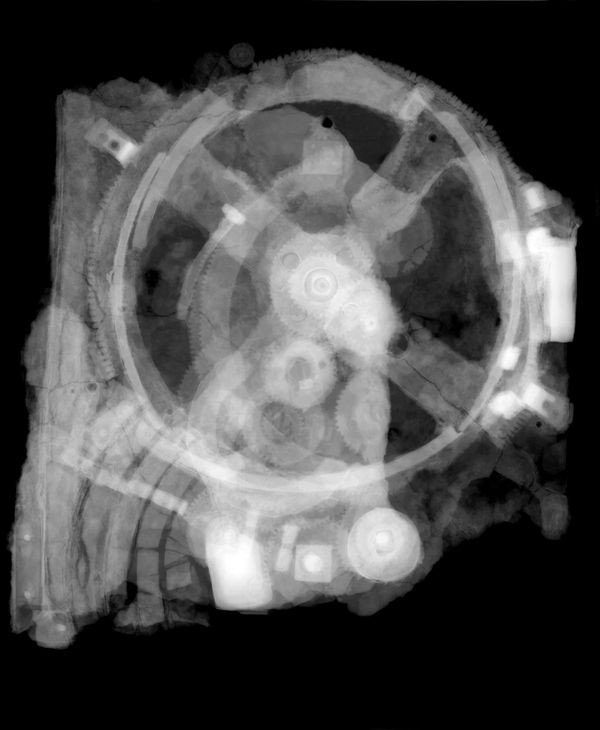
In 2006, advanced 3D CT scans offered better interior views that engendered serious scholarly reexamination. Gears appeared positioned to animate orbiting planets via epicyclic motion, while spiraled inscriptions denoted complex eclipse prediction methods. These nuances suggested intellectual ties to renowned Grecian astronomers like Hipparchus.
Questions and Mysteries Persist
Consensus now states the Antikythera mechanism served both observational astronomy and astrological forecasting functions through bronze gear modeling. It encoded core understandings of cosmos motions and mathematics within Hellenistic culture preceding Roman assimilation.
But many mysteries still swirl regarding the analog computer’s specifics – where precisely it was constructed, by whom, and aspects still vague from interpretation or missing pieces wasting amidst the wreckage ruins. Flourishing speculation fills academia and pop science writings alike.
At very least, the damaged relic’s sheer existence humbles those who assume ancients lacked technological sophistication, numerical literacy or abstract reasoning prized today. This astrolabe for antiquity proclaims intellectual continuity binding our shared human passions for pattern discovery and meaning encoded in moving skies overhead – whether reading omens in the stars or mathematically modeling their restless revolutions during civilizations long crumbled into dust.